2019 breeding season is underway with news of an exciting new project!

Goshawk
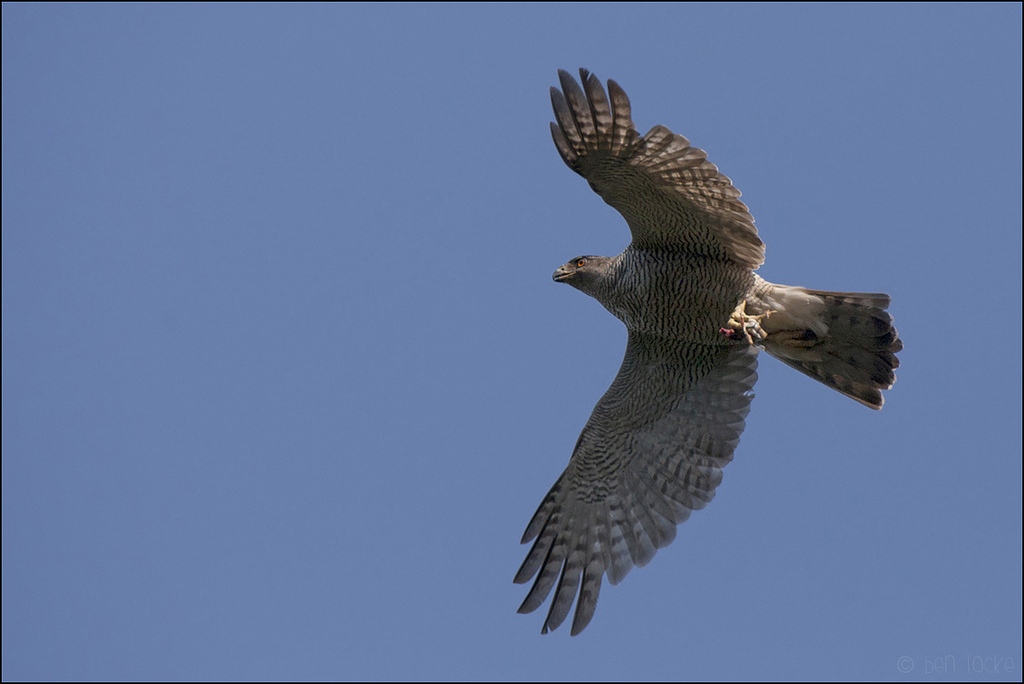
Northen Goshawk – Accipiter gentilis

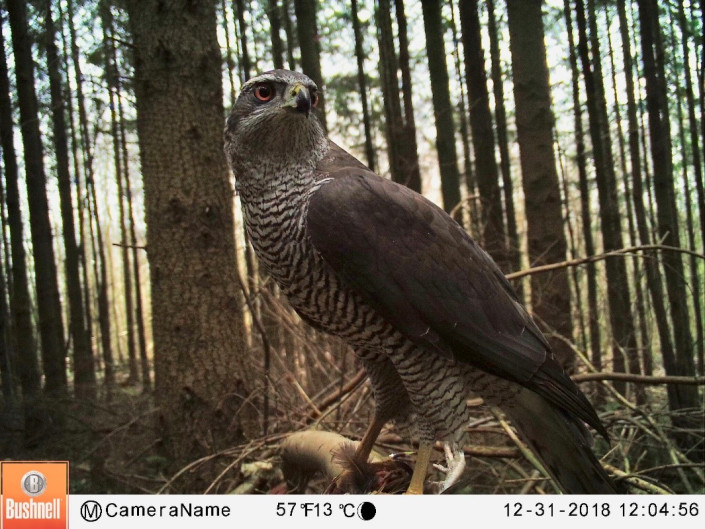
We ringed our first Raven chicks of the year recently – always our earliest species – so that marks the start of another busy season of nest-finding, ringing and monitoring. We have some news to announce; two of our ringers have been granted a licence to fit GPS tags to Goshawks, and we have secured funding to buy eight tags for use this year. Huge thanks to our donors/sponsors, namely the British Trust for Ornithology (BTO), Gloucestershire Naturalists’ Society, Gloucestershire Ornithological Co-ordinating Committee, Forestry England and Mr Richard Webb. This is an important project for us; it is an obvious extension of our work monitoring colour-ringed birds using trail cameras. We hope it will help us to track Goshawks that have had tags fitted to them as young birds in the nest. We should be able to assess their scale of their movement, habitat dependency and dispersal, and interactions with farmland as well as managed forest habitats. We may be able to accumulate information on the last known location of birds and mortality, and to understand the potential for population mixing and recruitment beyond the region. There is also the possibility to assess breeding home range if birds survive to adulthood or are tagged as adults.

This is in effect an extension of a project already being run by BTO staff in Breckland, Norfolk.

nest

Goshawk nest being monitored by a trailcam enabling us to read GRMG colour rings

BTO will license the whole activity, and BTO staff will train 2 GRMG fully-qualified ringers. Read on for full details…

Nationally, the Goshawk is a scarce breeding species and a “Schedule 1” breeding species (protected under the Wildlife and Countryside Act 1982). The species should be a common breeding raptor and although the UK population is slowly increasing, there is much regional variation, potentially due to low recruitment where persecution may pay a role. Very little is known, locally, about seasonal movements, habitat dependency, home range size, or their reliance on specific habitat types such as farmland. Farmland use is relevant given the potential for conflicts with game bird enthusiasts. Winter movements, recruitment potential and connections with more distant breeding populations are also currently unknown. Entirely new information on habitat use and the dispersal would emerge for this population, also giving the potential to compare and contrast with other regions within the UK. We would like to make it known publicly that individuals of these species are being tracked, as a protection measure.
The Goshawk is an elusive species, not amenable to normal visual observation. Advances in remote tracking offer the best opportunity and most objective way of acquiring behavioral data.

nest2
Goshawk nest at end of season. Grey Squirrels appear to be a major food source in Gloucestershire. If this is replicated across all monitored sites this would be good news for forestry.

Project objectives: Determination of habitat use and dispersal, the farmland interaction and possibly sources of mortality in the Gloucestershire population of Goshawks:

• To track Goshawks, to assess scale of movement, habitat dependency and dispersal; interactions with farmland as well as managed forest habitats.
• Potentially, to accumulate information on the last known location of birds and mortality.
• To understand the potential for population mixing and recruitment beyond the region.
• Potentially to assess breeding home range if birds survive to adulthood or are tagged as adults.

2016-06-06 18.51.41

Links between forest, farmland and fenland habitats may be expected, especially for juveniles or females in winter and links to forest edge are predicted. Some exploitation of game bird populations is expected, though varying widely with native prey availability (pigeons, jays and squirrels), sex, age and season.

The devices supplied by a company called Movetech Telemetry, a subsidiary of the BTO. The devices weigh between 18 and 23 grams depending on sex of the carrying bird. The devices are attached on the bird by a harness, which contains a sacrificial thread that is designed to break after around 5 years.
No ill effects have been shown on birds that have been recaptured or have been collected.

The ‘Movetech’ bird-tracking system described here is a bird-borne method of tracking bird movements, by connecting to the mobile phone network. This technique has been successfully applied to similar sized birds (gulls) and raptors (Goshawks, eagles, Ospreys, harriers, Peregrines). the system is much more objective and less labour-intensive than radio-tracking, producing high precision fixed location data, unlike any other currently available method (bar satellite tracking at far greater cost).


2013-06-08 19.12.20

CHANGE OF VENUE – Adventures with Rainforest Raptors

Due to circumstances entirely beyond our control, the venue for this Wednesday’s ‘Adventures with Rainforest Raptors’ has had to change. We’re not going far though –  just around the corner from the Gala. It’s the Oxstalls Sports Centre, Plock Court (just along from Fairmile Gardens, opposite the Beefeater), Gloucester GL2 9DW.  We’re in the Conservatory Room there.  There’s a café on site. Apologies for the inconvenience, and we look forward to seeing you there!

Upcoming event: “Adventures with Rainforest Raptors”, Wed 27th March

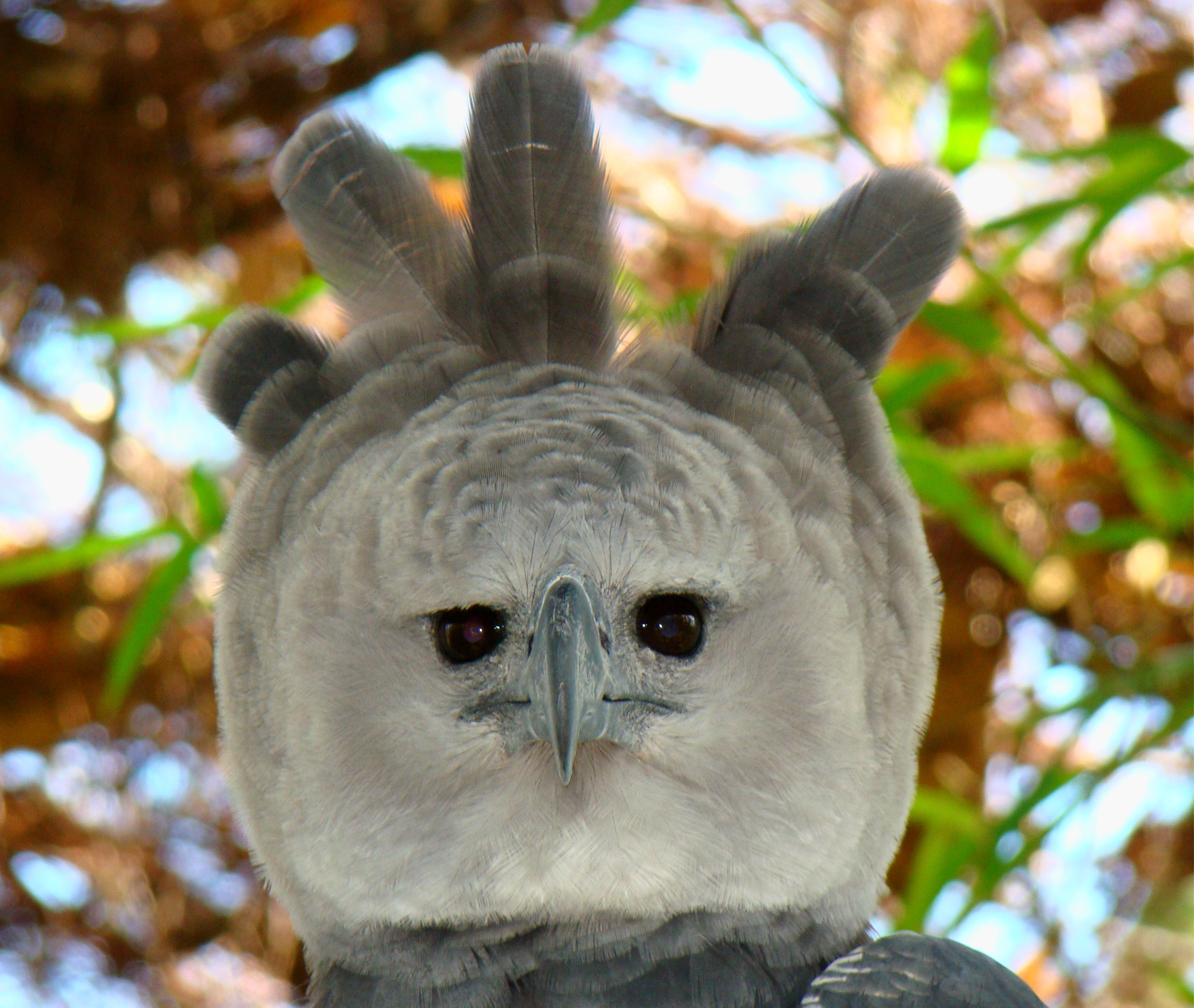
The main feature is a talk and short film ‘To Find a Harpy’ with Natasha Ellison and Dan O’Neill, respectively a researcher and a wildlife film-maker who recently went to Guyana to search for a Harpy Eagle, and filmed their adventure. We will also hear from GRMG’s Jimmi Hill, who visited the Philippine Eagle Project to see its amazing conservation work – and visited an active nest in the wild. Come along and feel the heat!

This is a ticketed event; tickets are £5 and can be bought at https://www.eventbrite.co.uk/e/adventures-with-rainforest-raptors-tickets-57329127965 or email [email protected] to ask for tickets to be reserved for you and pay at the door.

Venue: Gala Club, Fairmile Gardens, Gloucester, GL2 9EB
Doors open at 7:00pm for a 7:30 start.

Ten years of Peregrines at Cheltenham Christ Church

untitled-1Followers of this blog will already be familiar with Dave Pearce’s regular updates on the lives of the Cheltenham Christ Church Peregrines. Dave has now kindly provided us with a ten year summary which replaces the previous seven year summary, with refreshed videos, information, data, prey species analysis, privileged views and a whole lot more. You can download a copy of Dave’s summary here, and it will remain available along with lots of other resources, on our documents page.
Our next talk – Falcons and the Arctic, Jan 30th – tickets on sale now

We’re delighted to announce that our next talk is on Wednesday 30th January at The Gala Club, Fairmile Gardens, Gloucester, GL2 9EB – doors open at 7:00pm for a 7:30 start.

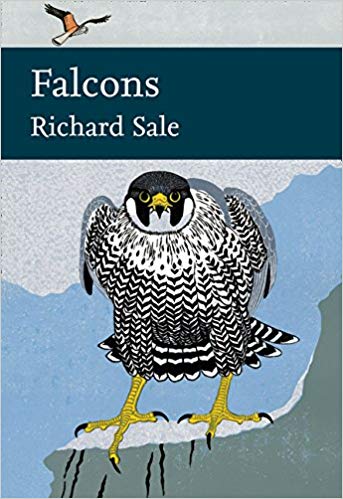
The speaker is Richard Sale, raptor researcher, Arctic enthusiast and author, and his New Naturalist book “Falcons” was described by British Wildlife magazine as ‘one of the best New Naturalists on birds, and one that is likely to remain the last word on British falcons for a long time.’ He wrote ‘the most comprehensive guide to Arctic Wildlife’, and is co-author of the just-published work on the Steller’s Sea Eagle, the first English-language study of this species. Richard will talk about falcons and about the Arctic, enabling him to draw on his vast experience of both topics – for example his recent studies include breeding Merlins in Scotland, Hobbies in England and Steller’s Sea Eagles in eastern Russia.

51ztTkshttL._SX341_BO1,204,203,200_

Richard will bring some copies of his Steller’s Sea Eagle book which he will sign and sell on the night for £30. He will also be happy to sign any of his published work which is brought along to the evening.

This is a ticketed event. Tickets are £7.50 each and are available online from The Bristol Ticket Shop.

If you are unable to buy online please email [email protected] to reserve tickets and pay on the door.

May we take this opportunity to wish you all a happy and restful festive season and to thank you for your continued support.

Christ Church Peregrine news from Dave Pearce

Many thanks to Dave Pearce for once again providing us with his year summary of the activities of the Christ Church Peregrines. Download this Word document for all the news from Dave, including photos and links to videos.

[youtube https://www.youtube.com/watch?v=GMI75gJCTSY&w=560&h=315]

Northern Goshawk, the phantom of the forest, an illustrated talk by Steve Watson

On Friday, 16th November Steve Watson will be giving an illustrated talk on Goshawks. Steve will cover the natural history of the goshawk, including its ecology, population dynamics, biology, foraging, courtship and breeding behaviour.

This event is organised by the Forest of Dean Group of the Gloucestershire Wildlife Trust. Entry is £2 and tickets are available on the door.  Click here for further information.

Project Owl: GRMG Winter Talk

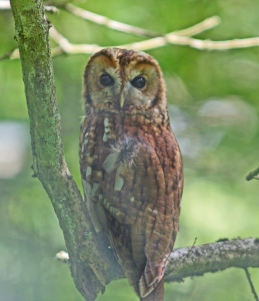
Tawny Owl
Tawny Owl (c) Andrew Bluett

Our first talk of the 2018/19 winter period will be on Wednesday November 14th 2018 when we have Hugh Hanmer from the British Trust for Ornithology. Hugh is the leader of the BTO’s Project Owl, so do come along to hear about this amazing group of raptors – and also find out how you can help with Project Owl, which is a major initiative over several years to study our owl populations, their habits and habitats. You’ll also find out more about how GRMG are helping owls in the county.

Venue: Ribston Hall High School, Gloucester, GL1 5LE
Time 7:30pm (doors 7:00pm)

Tickets are limited and you will need to bring an electronic copy (or paper copy, though electronic is preferred) of your ticket on the evening. For this event we have opted for a ‘donation’ style ticketing service allowing you to choose the price of your ticket. We hope that this talk will prove to be a successful fundraiser – the money raised will be divided between GRMG and the BTO specifically for Project Owl. Tickets for our previous talks sell for around £5 per ticket – there’s a basic £5 price to make it easier when buying more than one ticket. Full details and tickets can be found here – we look forward to seeing you there.

Our second talk will be ‘Falcons’ with New Naturalist author Richard Sale on January 30th 2019 – full details will be available shortly but please save the date!

More details about Project Owl can found here.

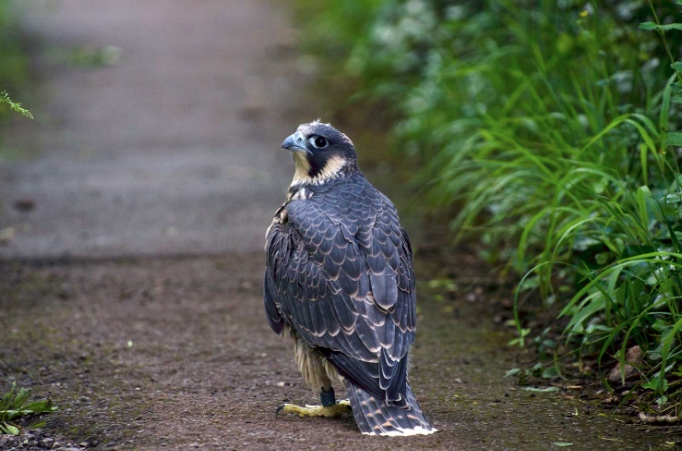
Tewkesbury Abbey’s Peregrines

Untitled-1Since the first Peregrine was seen at the abbey tower in 2011, this year they have bred to produce a single chick – Paddington. The story of Alice, Bella, Christopher Robin and Paddington – the Peregrines of Tewkesbury Abbey can be read here (Word document).

Ravens 2018

Raven
Raven (c) Mark A Hope

The beginning of the nesting season always starts with “Raven time”.
Ravens are early nesters often having eggs by mid-February.
This season has been a mixed affair with some clutches abandoned due to the severe weather, possibly cutting off food supplies rather than affecting the nest itself, several pairs had a second go with some abandoning the second attempt for reasons that are not clear. At least two others succeeded in their second attempts.
A number of nests were right on time following the usual pattern, and obviously weathered the storms, which makes trying to attribute weather only to failures difficult. It is tempting to assume the successful nests had food sources unaffected by weather, but it is only supposition and we have no direct evidence for that. Two nests only managed to produce a single youngster.

The radical otherness of birds

One of our supporters has drawn our attention to this superb piece of writing by American novelist and columnist Jonathan Franzen. It’s about why birds matter and although many of the references are to New World species, the sentiments are universal.